Blog Post

Why Are Babies So Cute? The Evolutionary Science of Baby Schema

By Alyssa Rios, C2ST Intern, Waubonsee Community College

Have you ever wondered why almost everyone instinctively smiles when they see a baby? Even though babies are a lot of work and can be disruptive, they are irresistibly cute, and it’s hard to stay mad at them. Babies get sweet and affectionate reactions out of total strangers, and the cuteness of a familiar baby seems to never wear off.  Scientists believe that reaction isn’t accidental; it may be an evolutionary adaptation to help babies survive.  

There is actually a term for babies’ cuteness and our response to it- the baby schema effect. Baby features, such as “chubby cheeks, large, low-set eyes, and a large, round head,” are part of their evolution. In other words, evolution may have made babies adorable because adorable babies are more likely to survive by eliciting responses from adults that encourage them to care for the babies. There is so much to love about how babies look, especially their stubby limbs, disproportionately large heads, and little button noses. Most of the baby schema features that have been extensively studied “appear in the head and the face.” This isn’t specific to human babies either; it applies to animals too! Animals that have features that register as “cute” in our brains have the same effect of caregiving responses, so it’s no wonder why puppies and kittens can steal the hearts of many. Their appearance does more than simply make them look adorable; it creates a specialized response from adults. This response happens largely without conscious thought, causing people to feel drawn to infant faces before they even realize what makes them so appealing.

Human babies are unusually helpless. They require years of care, unlike many other animals, so evolution favored traits that naturally encouraged adults to invest in their survival. Their infant features create a neurological response in adults to take care of, protect, and nurture babies, helping ensure they get the care they need to grow and develop. Not only does their appearance inspire us to take care of their needs, but it also inhibits aggression. This response is especially important during infancy, when babies are completely dependent on adults for everything. Together, these responses help create an environment in which infants are more likely to receive the protection, patience, and attention they need during the earliest stages of life. No wonder babies are so cute; they have to be to survive!  

Researchers have found that infants with stronger baby schema features were consistently rated as cuter and elicited a greater desire to care for and pay attention to them. This finding is especially important because it suggests that baby schema does more than make babies appear adorable; it ultimately encourages adults to prioritize their care. In their helplessness, these features may serve as one of the evolutionary mechanisms that increases their chances of survival. Of course, not everyone experiences this response equally. Parents may be more sensitive to the baby schema effect, and researchers also note that people who simply dislike infants may show weaker responses overall. 

Not only do babies’ infantile traits help us take care of them, they also promote bonding. Their features elicit smiles from those who look at them, and that contributes to positive relationships. Babies turn toward their caregivers’ facial expressions “to guide their feelings and behaviors,” so these positive expressions contribute to bonding between the baby and caretaker. 

The next time you see a baby and instinctively want to smile, hold, or interact positively with them, you now know that there is a scientific reason for that reaction! Those tiny features not only make babies adorable, but also ensure that the most dependent and vulnerable members of our society are being properly taken care of, protected, and loved. 


Sources: 

Glocker, Melanie L, et al. “Baby Schema in Infant Faces Induces Cuteness Perception and Motivation for Caretaking in Adults.” Ethology : Formerly Zeitschrift Fur Tierpsychologie, U.S. National Library of Medicine, Mar. 2009, pmc.ncbi.nlm.nih.gov/articles/PMC3260535/.

Hannah Spencer, Franca H. Parianen Lesemann, Renate S.M. Buisman, Eline J. Kraaijenvanger, Susan Branje, Marco P.M. Boks, Peter A. Bos, Facing infant cuteness: How nurturing care motivation and oxytocin system gene methylation are associated with responses to baby schema features, Hormones and Behavior, Volume 164, 2024, 105595, ISSN 0018-506X, https://doi.org/10.1016/j.yhbeh.2024.105595

Vicky Lehmann, Elisabeth M.J. Huis in‘t Veld, Ad J.J.M. Vingerhoets, The human and animal baby schema effect: Correlates of individual differences, Behavioural Processes, Volume 94, 2013, ISSN 0376-6357, https://doi.org/10.1016/j.beproc.2013.01.001.


Blog Post

Science of Everything: Air Quality Index

By Stephanie Sorich, C2ST Correspondent

For the citizens of Chicago, the summer of 2026 has not been all sunshine and lake days. Between violent storms turning into flash floods and hazy skies brought on by wildfires, the weather has been a mixed bag. Those smoky days have caused Chicagoans to focus on a once less-considered aspect of the weather: air quality.

Continue reading “Science of Everything: Air Quality Index”

Blog Post

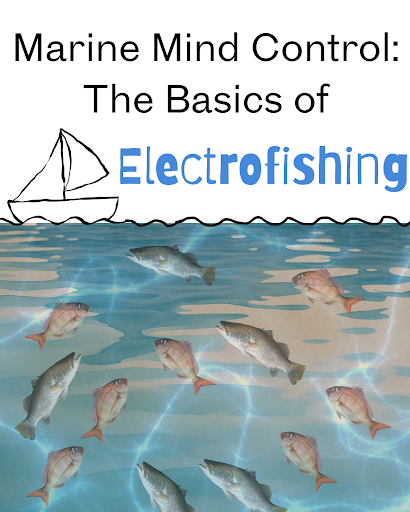
Marine Mind Control: The Basics of Electrofishing

By Alex Zhang, C2ST Intern, DePaul University

Just a few weeks ago I was fishing at Ottertail Lake, Minnesota, searching for Northern Pike. Like many fishermen, mobile apps and online threads help me gauge which species are located in each freshwater body. Through the collective knowledge of previous successful fishermen in an area, the internet allows us to gain a rough understanding of what we could find. For casual hobbyists, anecdotal evidence is more than enough to set up the right fishing strategy. But for scientists studying freshwater systems, obtaining precise results requires sampling fish on a much larger scale than the catch-and-click process. So how do they accomplish this?

(My brother holding a tiny pike we caught in Ottertail Lake.) Picture #1

In many shallow freshwater bodies, electrofishing is the preferred method for rapid research of fish populations, allowing scientists to collect dozens of individuals at once. While it may sound like a “shocking” technique, electrofishing is in fact a minimally invasive and reliable system used since the mid 1800s! The practice of stunning fish itself has existed within indigenous cultures for centuries with plant toxins; electrofishing simply presents a relatively new method of stupefying. The basic electrofishing boat outfit includes a metal boat, a generator, and a number of poles hanging from the front of the boat (referred to as booms or anodes). Once the boat is in the desired sampling area – and hopefully floating above a number of fish – the poles are lowered underwater.

Using a foot pedal to control the electricity, a circuit is created using the poles as a ‘positive’ end and the metal boat itself as a ‘negative’ end. Electric currents are pulsed through the booms, traveling the circuit and directly through the water, causing a process called galvanotaxis in nearby fish. Galvanotaxis appears just like “The Force” from Star Wars or Professor X’s telekinesis from Marvel’s X-Men; affected fish are forced to swim towards the boat against their will. But what seems like mind control is actually the biological process of involuntary muscle movement, caused by interactions between an electric current and the body of a fish. You can think of this similarly to the “It’s Alive!” scene in any Frankenstein media, where the creature jolts to life after it’s shocked with high-intensity voltage. The comparison is useful for understanding involuntary muscle movement, but electrofishing’s effects are far less violent than this.

While risks are always present, galvanotaxis is generally not harmful to fish assuming proper care, equipment, and methods are followed. The practice has been continually refined since its origins nearly 200 years ago, and modern electrofishing is an effective and efficient way to sample many aquatic species (even including crustaceans!). Once the stunned fish swim towards the boat, scientists use a net to scoop them up. From there, they can identify the species of fish, measure their physical traits, and administer a variety of other tests to learn more about the marine ecosystem. The fish are then placed back in the water unharmed and unchanged. 

Of course, electrofishing cannot be used in every scenario. Some freshwater bodies can be too deep for the electric current to work on fish, while the salt in non-freshwater bodies disrupts electrical currents and requires a different approach. The size and weight of a fish also change its effectiveness. Yet overall, electrofishing is an extremely useful tactic to be aware of, and represents one of the many ways ancient practices have evolved through modern technology. Now if only I could actually mind control the fish to swim to my bait! (Be warned, electrofishing is permitted for science purposes only and is illegal for fishermen.)


Sources:

Electrofishing – an overview | ScienceDirect Topics, accessed July 1, 2026

Electrofishing – FISHBIO | Fisheries Consultants.

Alonso (2001)

Fish Monitoring via Electrofisher – DNREC, accessed July 2, 2026

Florida Fish and Wildlife Commission, accessed July 3rd, 2026.

IISD Experimental Lakes Area, accessed July 2, 2026

James Reynolds, American Fisheries Society (2020)

Robert Heizer, Smithsonian Institution (1953)

Understanding Electrofishing: A Vital Tool for Fish Population Management (2025)

Washington Department of Natural Resources (2016)

Blog Post

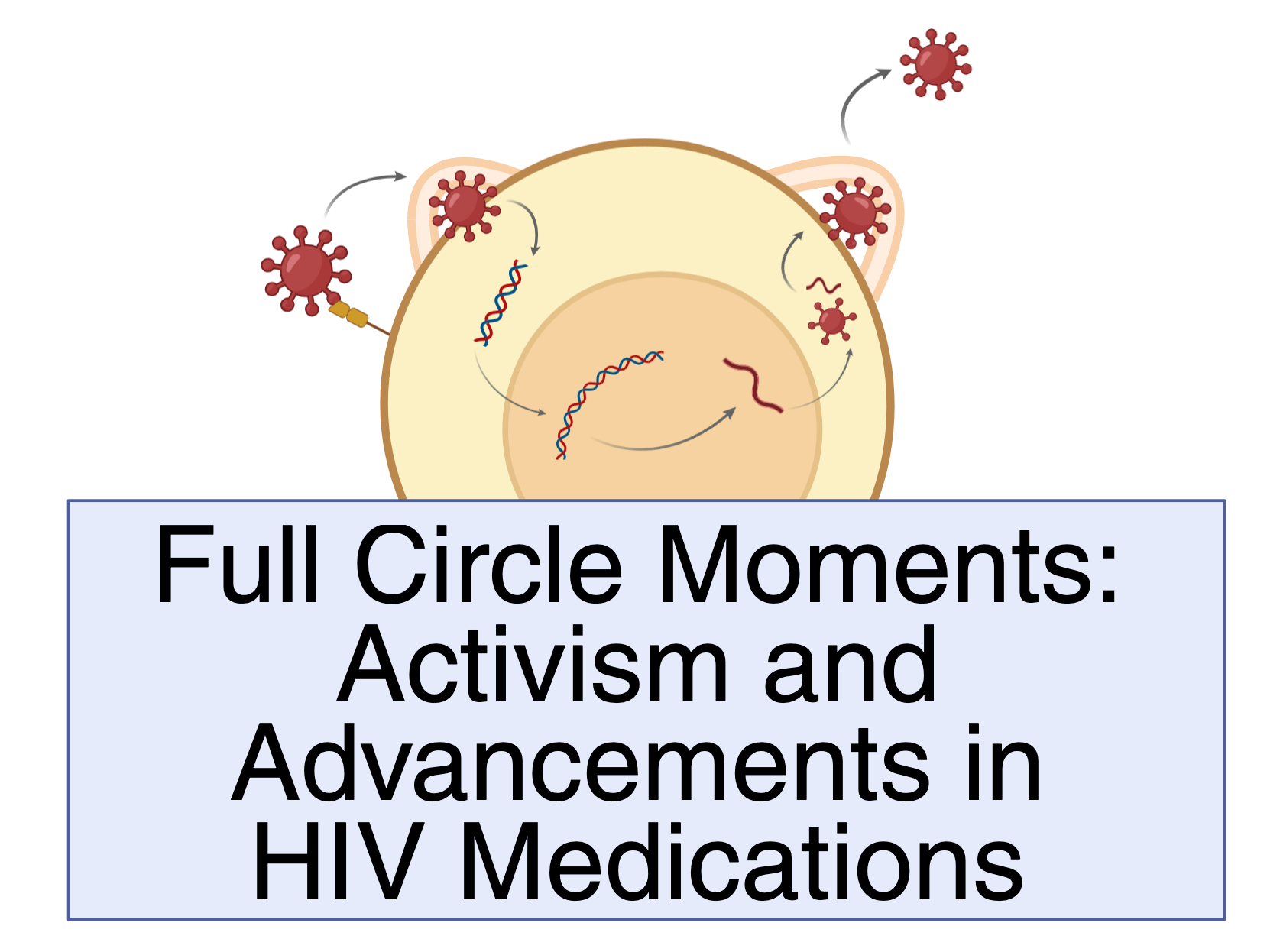
Full Circle Moments: Activism and Advancements in HIV Medications

By Lauren Chan, C2ST Intern, University of Chicago

In 2021, the Joint United Nations Programme on HIV/AIDS set a goal of ending AIDS as a public health threat by 2030. For years, activists advocated for quicker development of HIV medications, and their work influenced Food and Drug Administration (FDA) policies that remain in place today. Now, four years away from 2030, emerging HIV therapies are bringing the world closer to that goal. 

Continue reading “Full Circle Moments: Activism and Advancements in HIV Medications”

Blog Post

Science of Everything: Microwavable Plastics

By Lindsey Ramirez, PhD, C2ST Correspondent

It’s been on your mind all day — that leftover pasta that’s waiting for you in the fridge. You get home right as your stomach starts rumbling. It’s dinner time. But wait, all your plates are in the dishwasher, and you can’t wait until the cycle finishes; you’re hungry now. You can microwave your food in the takeout container, right? What’s the worst that could happen?

Continue reading “Science of Everything: Microwavable Plastics”

Blog Post

Science of Everything: Goosebumps

By Stephanie Sorich, C2ST Correspondent

You’re watching a scary movie. All of a sudden, you notice the eerie, tense silence that can only precede a jump scare. Every muscle is taut, you cover your eyes (to varying degrees of success), and then you feel the hairs on the back of your neck and all over your body raise in anticipation.

R.L. Stein, you’ve done it again.

Continue reading “Science of Everything: Goosebumps”