Why Are Babies So Cute? The Evolutionary Science of Baby Schema
By Alyssa Rios, C2ST Intern, Waubonsee Community College
Have you ever wondered why almost everyone instinctively smiles when they see a baby? Even though babies are a lot of work and can be disruptive, they are irresistibly cute, and it’s hard to stay mad at them. Babies get sweet and affectionate reactions out of total strangers, and the cuteness of a familiar baby seems to never wear off. Scientists believe that reaction isn’t accidental; it may be an evolutionary adaptation to help babies survive.
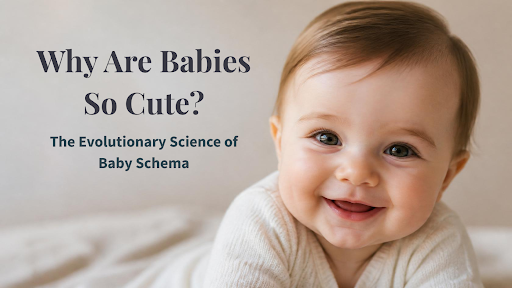
There is actually a term for babies’ cuteness and our response to it- the baby schema effect. Baby features, such as “chubby cheeks, large, low-set eyes, and a large, round head,” are part of their evolution. In other words, evolution may have made babies adorable because adorable babies are more likely to survive by eliciting responses from adults that encourage them to care for the babies. There is so much to love about how babies look, especially their stubby limbs, disproportionately large heads, and little button noses. Most of the baby schema features that have been extensively studied “appear in the head and the face.” This isn’t specific to human babies either; it applies to animals too! Animals that have features that register as “cute” in our brains have the same effect of caregiving responses, so it’s no wonder why puppies and kittens can steal the hearts of many. Their appearance does more than simply make them look adorable; it creates a specialized response from adults. This response happens largely without conscious thought, causing people to feel drawn to infant faces before they even realize what makes them so appealing.
Human babies are unusually helpless. They require years of care, unlike many other animals, so evolution favored traits that naturally encouraged adults to invest in their survival. Their infant features create a neurological response in adults to take care of, protect, and nurture babies, helping ensure they get the care they need to grow and develop. Not only does their appearance inspire us to take care of their needs, but it also inhibits aggression. This response is especially important during infancy, when babies are completely dependent on adults for everything. Together, these responses help create an environment in which infants are more likely to receive the protection, patience, and attention they need during the earliest stages of life. No wonder babies are so cute; they have to be to survive!
Researchers have found that infants with stronger baby schema features were consistently rated as cuter and elicited a greater desire to care for and pay attention to them. This finding is especially important because it suggests that baby schema does more than make babies appear adorable; it ultimately encourages adults to prioritize their care. In their helplessness, these features may serve as one of the evolutionary mechanisms that increases their chances of survival. Of course, not everyone experiences this response equally. Parents may be more sensitive to the baby schema effect, and researchers also note that people who simply dislike infants may show weaker responses overall.
Not only do babies’ infantile traits help us take care of them, they also promote bonding. Their features elicit smiles from those who look at them, and that contributes to positive relationships. Babies turn toward their caregivers’ facial expressions “to guide their feelings and behaviors,” so these positive expressions contribute to bonding between the baby and caretaker.
The next time you see a baby and instinctively want to smile, hold, or interact positively with them, you now know that there is a scientific reason for that reaction! Those tiny features not only make babies adorable, but also ensure that the most dependent and vulnerable members of our society are being properly taken care of, protected, and loved.
Sources:
Glocker, Melanie L, et al. “Baby Schema in Infant Faces Induces Cuteness Perception and Motivation for Caretaking in Adults.” Ethology : Formerly Zeitschrift Fur Tierpsychologie, U.S. National Library of Medicine, Mar. 2009, pmc.ncbi.nlm.nih.gov/articles/PMC3260535/.
Hannah Spencer, Franca H. Parianen Lesemann, Renate S.M. Buisman, Eline J. Kraaijenvanger, Susan Branje, Marco P.M. Boks, Peter A. Bos, Facing infant cuteness: How nurturing care motivation and oxytocin system gene methylation are associated with responses to baby schema features, Hormones and Behavior, Volume 164, 2024, 105595, ISSN 0018-506X, https://doi.org/10.1016/j.yhbeh.2024.105595.
Vicky Lehmann, Elisabeth M.J. Huis in‘t Veld, Ad J.J.M. Vingerhoets, The human and animal baby schema effect: Correlates of individual differences, Behavioural Processes, Volume 94, 2013, ISSN 0376-6357, https://doi.org/10.1016/j.beproc.2013.01.001.