Blog Post

How do Scientists Model the Climate?

By Buduka Ogonor, C2ST Volunteer

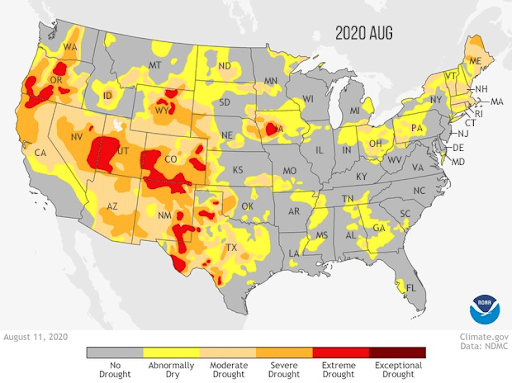
Earth’s climate system is complex. The system comprises interactions between Earth’s landmasses, the oceans, the ecosystems, the atmosphere, and even the sun. Despite those complexities, one alarming fact remains clear: the climate is changing, and is projected to continue changing. Projections suggest the melting of the polar ice caps, rising sea levels, and extremes in rainfall patterns. But how are scientists able to make these projections? How do scientists even begin to approach the daunting task of modeling and making predictions about such a large, complex system like Earth’s climate? 

Continue reading “How do Scientists Model the Climate?”

Blog Post

Bats of a Feather Stick Together

By Laura Tran, C2ST Intern, Rush University

The animal kingdom can be cut-throat, as friendship is not found in all animal species generally speaking. Animals of the same species can have acquaintances and animals of different species have also been observed to form bonds. But is this friendship? For a long time, scientists shied away from even using the term “friendship” in the context of animal bonds. It was believed that animals mainly had short-term, goal-oriented relations to satisfy their current needs (e.g., access to food or mates). This is similar to a business transaction, and begs the question, “Is there a benefit to investing time and energy into making friends?” In short, the answer is yes! Continue reading “Bats of a Feather Stick Together”

Blog Post

Kelp Needs our Help: Ocean Warming and the Threat to Ocean Flora

By Rowan Obach, C2ST Intern, Loyola University

In Illinois we’re used to seeing lush green forests rooted in grassy soils, however, in other parts of the world, forests take different forms. Deep beneath the surface of the ocean, lush kelp forests are home to thousands of species of fish, marine animals, and crustaceans. These forests exist all across the world, usually around coastal regions like Northern California, Central Chile, and South Australia to name a few. Kelp forests are typically located 49-131 feet beneath the surface and need very specific conditions to thrive. They need cold water with a lot of nutrients. Changes to the environment, like extreme weather events, can uproot the kelp and diminish an important source of food and shelter for many species. 

Continue reading “Kelp Needs our Help: Ocean Warming and the Threat to Ocean Flora”

Event

Increasing LGBTQ+ Representation in the STEM Community

The live-stream portion of the program will run from 6 – 7 pm. YouTube Link: https://www.youtube.com/watch?v=LGh0JkrVrPM

This just in! You will be provided a parking pass if you park in the E Huron St. Parking Garage at Northwestern.

*Lite dinner provided! Join us in person for sandwiches and salad during the pre-program or post-program networking opportunities!*

Science is a human endeavor. As a result, science is not free from bias. This is why it is important to create culturally and socially relevant environments in STEM. To do this, we must design inclusive spaces for learning and professional work. The traditionally straight, white, and masculine narrative of STEM needs to be rewritten!  Continue reading “Increasing LGBTQ+ Representation in the STEM Community”