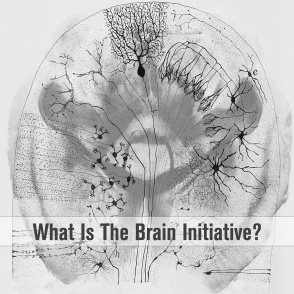
BRAIN. No longer just a word to describe the three-pound hunk inside your skull. As of April 2013, “BRAIN” is also a White House initiative- Brain Research through Advancing Innovative Neurotechnologies. What exactly are researchers hoping to discover and how are they going about this? Chicago Council on Science and Technology hosted a panel discussion on the BRAIN Initiative this fall, and in it they set out to tackle these questions, and consider the current landscape of neuroscience research.
The first day of classes is finally over. Trudging home, you lug a massive book-bag stuffed with your 7.6-pound copy of Principles of Neural Science. Jeez, you think, we must know everything about our brain.
Our Women in STEM: Connect is back! This year’s event will feature a lively panel discussion with Q&A, video shorts, and will be followed by networking. We welcome everyone, fromwomen just contemplating a future in a science-related field to career veterans, and all those in between. Men are welcome to attend!
This repost seems acutely relevant given the recent Islamic State attacks on targets in Paris France. My basic (though wildly oversimplified take is that US military recruiters appeal to young men’s “inner comic book superhero”. US military marketing videos attempt to stimulate, in the hypothalamus, the production of testosterone. In contrast ISIS recruiting vids lean heavily toward th warm and fuzzy in big to entice young jihadi brains to produce oxytocin.
The Museum of Science and Industry (MSI) recently opened a one-of-its-kind temporary exhibit, Robot Revolution. This unprecedented exhibit features more than 40 robots from all over the world. Want to hear more about what it took to assemble this collection, which includes robots from Japan, China, Germany, and France, or what it takes to keep all of these machines up and running, and interacting with the public? Join two of the women who work behind-the-scenes at MSI’s Robot Revolution for a night of fun with Chicago Council on Science and Technology at Geek Bar Beta’s SCIENCE! Tuesday.
Graphic narratives, also known as comics, are increasingly being used to unpack complex concepts and experiences. Despite the stigma of being thought of as juvenile reading matter (and not ‘real reading’ at that), comics actually have a long history of addressing complex topics.Communicating scientific ideas—whether to a student, a patient, or a peer, can be difficult, and having a visual way of describing something can greatly enhance the process. Come learn with the Comic Nurse, MK Czerwiec, as she takes us through her creative process, and teaches us how to use comics to communicate.